
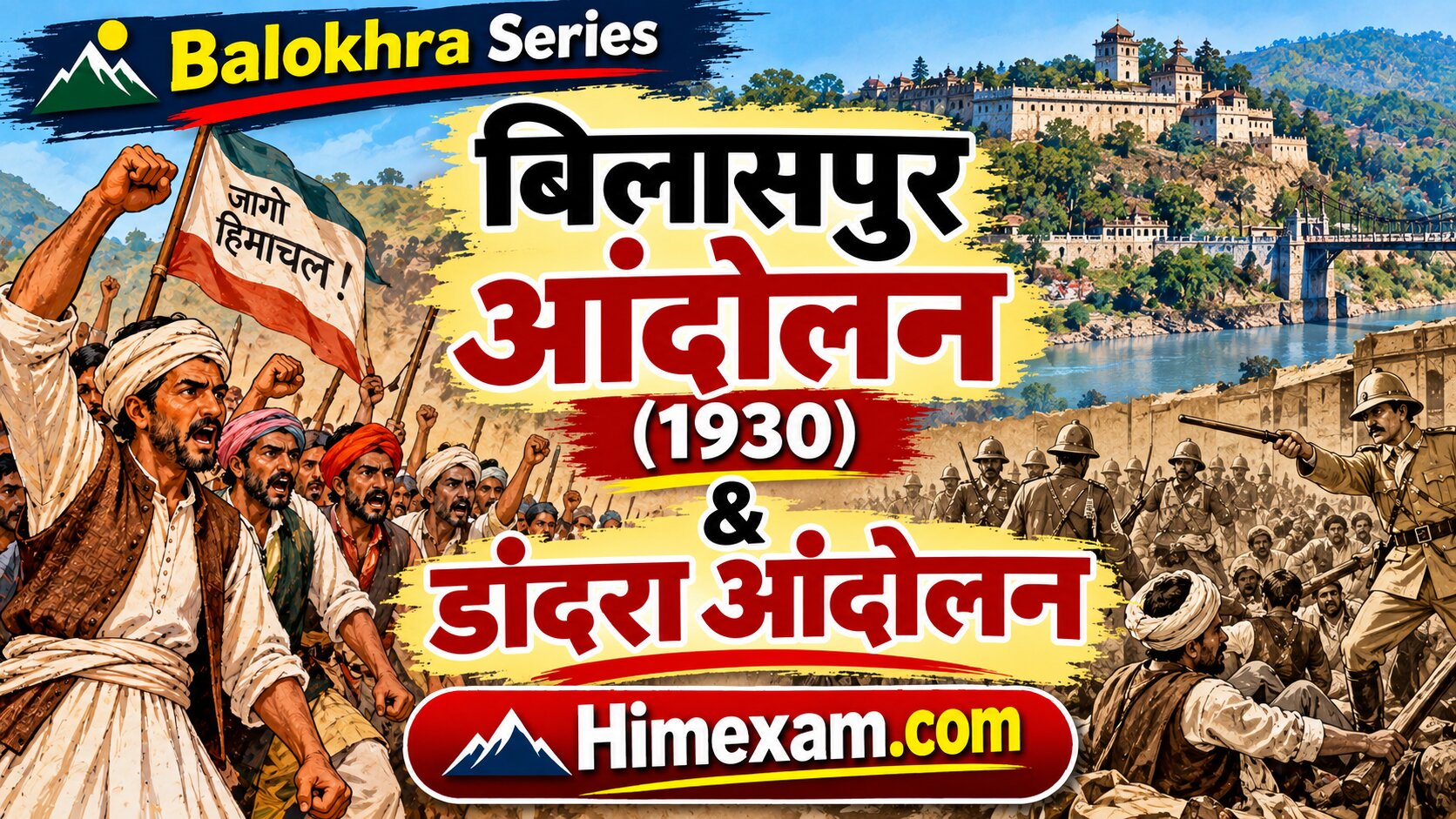




बिलासपुर आंदोलन 1930 एवं डांडरा आंदोलन | Bilaspur Movement 1930 & Dandra Movement
बिलासपुर आंदोलन (1930 ई.) / Bilaspur Movement (1930 AD): 1930 ईस्वी में बिलासपुर रियासत में भूमि बंदोबस्त के समय एक बड़ा जनविद्रोह हुआ। इस आंदोलन का प्रमुख कारण भूमि लगान एवं अन्य करों में वृद्धि की आशंका, भूमि बंदोबस्त का खर्च, कर्मचारियों का खर्च तथा दैनिक उपयोग की वस्तुओं जैसे लकड़ी, दूध और अनाज आदि का अतिरिक्त बोझ था। इसी कारण लोगों ने भूमि बंदोबस्त का विरोध शुरू किया।
Bilaspur Movement (1930 AD): A major popular uprising took place in the Bilaspur princely state in 1930 during the land settlement. The people feared an increase in land revenue and other taxes. The expenses associated with the settlement, officials and the supply of daily-use items such as wood, milk and food grains further increased the burden on the people. Consequently, people began opposing the land settlement.
बिलासपुर आंदोलन के प्रमुख कारण | Major Causes of the Bilaspur Movement
- भूमि बंदोबस्त के कारण भूमि लगान और अन्य करों में वृद्धि की आशंका।
Fear of an increase in land revenue and other taxes due to the land settlement. - भूमि बंदोबस्त का बढ़ता खर्च।
Increasing expenses related to the land settlement. - बंदोबस्त कर्मचारियों का खर्च और उनके लिए दैनिक आवश्यक वस्तुओं की व्यवस्था।
Expenses of settlement officials and arrangements for their daily necessities. - लकड़ी, दूध, घी, रोटी और अनाज जैसी वस्तुओं का अतिरिक्त बोझ।
Additional burden of items such as wood, milk, ghee, bread and food grains. - भारी भू-राजस्व और लोगों की आर्थिक स्थिति से संबंधित शिकायतें।
Grievances regarding heavy land revenue and the economic condition of the people.
आंदोलन की शुरुआत | Beginning of the Movement
सबसे पहले परगना बहादुरपुर के लोगों ने भूमि बंदोबस्त के विरुद्ध आंदोलन शुरू किया। उन्होंने बंदोबस्त कर्मचारियों को लकड़ी, दूध, घी, रोटी आदि मुफ्त देना बंद कर दिया। इसके साथ ही कर्मचारियों के ठहरने की व्यवस्था करना भी बंद कर दिया गया।
The people of Pargana Bahadurpur were among the first to launch an agitation against the settlement. They stopped providing settlement officials with free supplies such as wood, milk, ghee and bread and also stopped making arrangements for their stay.
इसके बाद बंदोबस्त कर्मचारियों ने सख्ती शुरू की और बंदोबस्त की प्रक्रिया में गड़बड़ी करके किसानों को परेशान किया। बहादुरपुर के लोगों ने इसके विरोध में पटवारियों के पैमाइश के सामान को तोड़-फोड़ दिया। दूसरे परगनों के लोगों ने भी इसी प्रकार विरोध किया।
The settlement officials subsequently adopted a strict approach and harassed cultivators through irregularities in the settlement process. In protest, the people of Bahadurpur damaged the measuring equipment used by patwaris. People from other parganas also joined the protest in a similar manner.
नमक चखकर शपथ | Oath by Tasting Salt
आंदोलनकारियों ने आपसी एकता बनाए रखने और आंदोलन में पूरी भागीदारी निभाने के लिए नमक चखकर शपथ ली। यह आंदोलनकारियों की एकजुटता और सामूहिक प्रतिरोध का प्रतीक था।
To maintain unity and ensure full participation in the agitation, the protesters took an oath by tasting salt. This became a symbol of their unity and collective resistance.
राजा आनंद चंद के समय की स्थिति | Situation During the Reign of Raja Anand Chand
इस समय बिलासपुर के राजा आनंद चंद (1933–1948) अवयस्क थे। इसलिए राज्य का प्रशासन चलाने के लिए एक काउंसिल बनाई गई थी। स्थिति को देखते हुए काउंसिल के अध्यक्ष स्वयं आंदोलन क्षेत्र में गए।
At that time, the ruler of Bilaspur, Raja Anand Chand (1933–1948), was a minor. Therefore, a Council had been constituted to administer the state. In view of the situation, the President of the Council personally visited the affected area.
आंदोलनकारियों की प्रमुख शिकायतें | Major Grievances of the Protesters
आंदोलनकारियों ने काउंसिल के अध्यक्ष को अपनी शिकायतों की एक सूची दी। इनमें प्रमुख रूप से निम्नलिखित मुद्दे शामिल थे:
- नजराने की दर में वृद्धि / Increase in the rate of nazrana
- मछली पकड़ने के लाइसेंस की फीस में वृद्धि / Increase in fishing licence fees
- भेदभावपूर्ण वन नीति / Discriminatory forest policy
- माल विभाग के कर्मचारियों की मनमानी / Arbitrary conduct of revenue department officials
- गांव की महिलाओं के साथ अभद्र व्यवहार / Misbehaviour with women in villages
- भारी भू-राजस्व / Heavy land revenue
काउंसिल के अध्यक्ष पी. एल. चन्दूलाल की भूमिका | Role of P. L. Chandulal
लोगों की आर्थिक स्थिति तथा राज्य द्वारा लगाए गए भारी भू-राजस्व से उत्पन्न परिस्थितियों को काउंसिल के अध्यक्ष पी. एल. चन्दूलाल ठीक प्रकार से संभाल नहीं सके। इसके परिणामस्वरूप लोगों में असंतोष और अधिक फैल गया।
The President of the Council, P. L. Chandulal, was unable to adequately manage the situation arising from the economic difficulties of the people and the heavy land revenue imposed by the state. As a result, public discontent increased further.
लाहौर से सैनिक सहायता | Military Assistance from Lahore
रियासती पुलिस आंदोलन की स्थिति से निपटने में असमर्थ रही। इसलिए लाहौर के रेजीडेंट से सैनिक सहायता भेजने का अनुरोध किया गया। रेजीडेंट के अवर सचिव राजा ज्ञान नाथ को कुछ सैनिकों के साथ भेजा गया।
The state police was unable to control the situation. Therefore, military assistance was requested from the Resident at Lahore. The Resident’s Under-Secretary, Raja Gyan Nath, was sent with some soldiers.
रियासती सरकार ने आंदोलनकारियों को कुछ रियायतें देने का आश्वासन दिया, लेकिन लोगों ने इन रियायतों को स्वीकार नहीं किया।
The state government assured the protesters of certain concessions, but the people rejected these concessions.
जेम्स फिट्स पैट्रिक और एडवर्ड वेकफील्ड की भूमिका | Role of James Fitzpatrick and Edward Wakefield
आंदोलनकारियों से निपटने के लिए लाहौर के रेजीडेंट जेम्स फिट्स पैट्रिक (James Fitzpatrick) ने सचिव एडवर्ड वेकफील्ड (Edward Wakefield) को कुछ और सैनिकों के साथ बिलासपुर भेजा।
To deal with the protesters, Lahore Resident James Fitzpatrick sent Secretary Edward Wakefield to Bilaspur with additional troops.
नम्होल की घटना और आंदोलनकारियों की गिरफ्तारी | Namhol Incident and Arrests
पुलिस ने नम्होल गांव में मेले के अवसर पर एकत्रित कुछ आंदोलनकारी नेताओं को पकड़कर बिलासपुर लाया। अगले दिन लगभग 1,000 लोग अपने नेताओं को छुड़ाने के लिए बिलासपुर में एकत्रित हुए।
The police arrested some of the protest leaders who had gathered at a fair in Namhol village and brought them to Bilaspur. The following day, approximately 1,000 people gathered in Bilaspur to secure the release of their leaders.
सरकार ने इस भीड़ को गैरकानूनी घोषित कर दिया। पुलिस ने भीड़ को हटाने के लिए डंडे चलाए और कुछ आंदोलनकारियों को हिरासत में लेकर जेल भेज दिया।
The government declared the gathering unlawful. The police used batons to disperse the crowd and detained some protesters, who were subsequently imprisoned.
45 व्यक्तियों पर देशद्रोह के मुकदमे | Sedition Cases Against 45 Persons
इस आंदोलन के दौरान 45 व्यक्तियों पर देशद्रोह के मुकदमे चलाए गए। रियासती सरकार ने इस घटना को भयानक बगावत का नाम दिया।
During the movement, 45 persons were prosecuted for sedition. The princely state government described the incident as a serious rebellion.
डांडरा आंदोलन नाम क्यों पड़ा? | Why Was It Called the Dandra Movement?
पुलिस द्वारा आंदोलनकारियों को नियंत्रित करने के लिए डंडे चलाने के कारण इस आंदोलन का नाम “डांडरा आंदोलन” पड़ा।
The movement came to be known as the “Dandra Movement” because the police used batons (dandas) against the protesters while suppressing the agitation.
डांडरा आंदोलन के प्रमुख तथ्य | Important Facts about the Dandra Movement
| तथ्य | Fact | विवरण | Details |
|---|---|
| आंदोलन का वर्ष | Year | 1930 ईस्वी | 1930 AD |
| स्थान | Place | बिलासपुर रियासत | Bilaspur Princely State |
| मुख्य कारण | Main Cause | भूमि बंदोबस्त, भारी भू-राजस्व एवं अन्य शिकायतें | Land settlement, heavy land revenue and other grievances |
| प्रारंभिक क्षेत्र | Initial Area | परगना बहादुरपुर | Pargana Bahadurpur |
| शपथ | Oath | नमक चखकर | By tasting salt |
| राजा | Ruler | आनंद चंद (1933–1948) | Anand Chand (1933–1948) |
| काउंसिल के अध्यक्ष | Council President | पी. एल. चन्दूलाल | P. L. Chandulal |
| प्रमुख शिकायतें | Major Grievances | नजराना, मछली पकड़ने का लाइसेंस शुल्क, वन नीति, माल विभाग की मनमानी और महिलाओं के साथ अभद्र व्यवहार आदि |
| प्रमुख स्थान | Important Place | नम्होल गांव | Namhol village |
| लगभग भीड़ | Approximate Crowd | लगभग 1,000 लोग | Approximately 1,000 people |
| देशद्रोह के मुकदमे | Sedition Cases | 45 व्यक्तियों पर | Against 45 persons |
| आंदोलन का नाम | Name of Movement | डांडरा आंदोलन | Dandra Movement |
| पंजाब पुलिस की उपस्थिति | Punjab Police Presence | तीन महीने | Three months |
| कैद | Imprisonment | 19 लोग | 19 persons |
| जुर्माना | Fine | कुल ₹25,000 | Total ₹25,000 |
डांडरा आंदोलन का महत्व | Significance of the Dandra Movement
डांडरा आंदोलन बिलासपुर रियासत में किसानों और सामान्य जनता से जुड़ा एक महत्वपूर्ण आंदोलन था। इसका संबंध भूमि बंदोबस्त, भू-राजस्व तथा प्रशासनिक नीतियों के विरुद्ध लोगों के असंतोष से था। इस आंदोलन के दौरान लोगों ने सामूहिक रूप से अपनी शिकायतें प्रस्तुत कीं और प्रशासन से समस्याओं के समाधान की मांग की।
The Dandra Movement was an important popular movement in the Bilaspur princely state, particularly associated with grievances over land settlement, land revenue and administrative policies. The protesters collectively raised their grievances and demanded solutions to their problems.
यह रियासत बिलासपुर का किसानों तथा सामान्य जनता से जुड़ा अंतिम आंदोलन बताया गया है, जिसमें सरकार और लोगों के बीच समस्याओं के समाधान के लिए सीधे संवाद तथा विस्तृत चर्चा हुई।
It is described as the last movement in the Bilaspur princely state associated with the peasants and general population, in which direct dialogue and detailed discussion took place between the government and the people regarding the resolution of their problems.
परीक्षा के लिए महत्वपूर्ण बिंदु | Important Exam Points
- बिलासपुर आंदोलन कब हुआ? — 1930 ईस्वी
When did the Bilaspur Movement take place? — 1930 AD - आंदोलन की शुरुआत किस क्षेत्र से हुई? — परगना बहादुरपुर
Where did the movement initially begin? — Pargana Bahadurpur - आंदोलनकारियों ने एकता के लिए क्या किया? — नमक चखकर शपथ ली
What did the protesters do to maintain unity? — They took an oath by tasting salt. - उस समय बिलासपुर का राजा कौन था? — आनंद चंद
Who was the ruler of Bilaspur at that time? — Anand Chand - काउंसिल के अध्यक्ष कौन थे? — पी. एल. चन्दूलाल
Who was the President of the Council? — P. L. Chandulal - आंदोलन को किस नाम से जाना गया? — डांडरा आंदोलन
What was the movement known as? — Dandra Movement - 45 व्यक्तियों पर किस प्रकार के मुकदमे चले? — देशद्रोह के मुकदमे
What cases were filed against 45 persons? — Sedition cases - पंजाब की पुलिस बिलासपुर में कितने समय तक रही? — तीन महीने
How long did the Punjab Police remain in Bilaspur? — Three months - कितने लोगों को कैद हुई? — 19 लोग
How many people were imprisoned? — 19 persons - कुल कितना जुर्माना लगाया गया? — ₹25,000
What was the total fine imposed? — ₹25,000
MCQ:-
Question: 1930 ईस्वी में बिलासपुर आंदोलन का तात्कालिक कारण क्या था? / What was the immediate cause of the Bilaspur Movement of 1930?
(a) राज्य में वन नीति में परिवर्तन / Change in the forest policy of the state
(b) भूमि बन्दोबस्त के कारण भूमि लगान एवं अन्य करों में वृद्धि की आशंका / Fear of an increase in land revenue and other taxes due to land settlement
(c) मछली पकड़ने के अधिकारों पर प्रतिबंध / Restrictions on fishing rights
(d) बेगार प्रथा का विस्तार / Expansion of the begar system
Answer: b
Question: बिलासपुर आंदोलन (1930) के संदर्भ में निम्नलिखित में से कौन–सा कथन सही है? / With reference to the Bilaspur Movement (1930), which of the following statements is correct?
(a) आंदोलन की शुरुआत परगना बहादुरपुर के लोगों ने की थी / The movement was initiated by the people of Pargana Bahadurpur
(b) आंदोलन की शुरुआत बिलासपुर के राजा ने की थी / The movement was initiated by the Raja of Bilaspur
(c) आंदोलन केवल सरकारी कर्मचारियों तक सीमित था / The movement was limited only to government employees
(d) आंदोलन का मुख्य मुद्दा केवल वन अधिकार था / The main issue of the movement was only forest rights
Answer: a
Question: भूमि बन्दोबस्त के विरोध में परगना बहादुरपुर के लोगों ने कर्मचारियों को कौन–सी सुविधाएँ देना बंद कर दिया? / What facilities did the people of Pargana Bahadurpur stop providing to the settlement officials in protest against the land settlement?
(a) केवल भोजन / Food only
(b) लकड़ी, दूध, घी और रोटी आदि / Firewood, milk, ghee and bread, etc.
(c) केवल परिवहन / Transportation only
(d) केवल आवास / Accommodation only
Answer: b
Question: बिलासपुर आंदोलन के दौरान ‘नमक चख कर शपथ’ लेने का प्रमुख उद्देश्य क्या था? / What was the main purpose of taking an oath by ‘tasting salt’ during the Bilaspur Movement?
(a) कर न देने की शपथ / To pledge not to pay taxes
(b) आंदोलन में एकता बनाए रखने और पूरी भागीदारी निभाने की शपथ / To pledge unity and full participation in the movement
(c) सरकारी कर्मचारियों का बहिष्कार करने की शपथ / To pledge to boycott government employees
(d) राजा के विरुद्ध सशस्त्र संघर्ष की शपथ / To pledge armed struggle against the Raja
Answer: b
Question: 1930 के बिलासपुर आंदोलन के समय बिलासपुर का राजा कौन था? / Who was the Raja of Bilaspur during the Bilaspur Movement of 1930?
(a) आनंद चन्द / Anand Chand
(b) विजयेंद्र चन्द / Vijendra Chand
(c) संसार चन्द / Sansar Chand
(d) अमर चन्द / Amar Chand
Answer: a
Question: बिलासपुर आंदोलन के समय राजा आनंद चन्द की आयु/स्थिति के संबंध में स्रोत में क्या उल्लेख है? / What does the source mention about Raja Anand Chand during the Bilaspur Movement?
(a) वे वृद्ध थे / He was elderly
(b) वे अवयस्क थे / He was a minor
(c) वे निर्वासित थे / He was in exile
(d) वे आंदोलन के नेता थे / He was the leader of the movement
Answer: b
Question: बिलासपुर राज्य में प्रशासन चलाने के लिए उस समय कौन–सी व्यवस्था बनाई गई थी? / What administrative arrangement had been created to run the Bilaspur State at that time?
(a) एक विधान सभा / A Legislative Assembly
(b) एक काउंसिल / A Council
(c) एक पंचायत परिषद / A Panchayat Council
(d) एक सैन्य परिषद / A Military Council
Answer: b
Question: बिलासपुर आंदोलनकारियों की शिकायतों की सूची में निम्नलिखित में से कौन–सा मुद्दा शामिल था? / Which of the following issues was included in the list of grievances submitted by the Bilaspur agitators?
(a) नजराने की दर में वृद्धि / Increase in the rate of nazrana
(b) मछली पकड़ने के लाइसेंस की फीस में बढ़ोतरी / Increase in fishing licence fees
(c) माल विभाग के कर्मचारियों की मनमानी / Arbitrary conduct of officials of the Revenue Department
(d) उपर्युक्त सभी / All of the above
Answer: d
Question: बिलासपुर आंदोलनकारियों की शिकायतों को सुनने के लिए काउंसिल का अध्यक्ष स्वयं किस क्षेत्र में गया था? / To hear the grievances of the Bilaspur agitators, where did the Chairman of the Council personally go?
(a) बिलासपुर नगर / Bilaspur town
(b) बहादुरपुर क्षेत्र / Bahadurpur area
(c) मंडी क्षेत्र / Mandi region
(d) लाहौर / Lahore
Answer: b
Question: बिलासपुर आंदोलन के संदर्भ में काउंसिल के अध्यक्ष पी. एल. चन्दूलाल आंदोलन की स्थिति को क्यों नहीं संभाल सके? / Why was the Chairman of the Council, P. L. Chandulal, unable to control the situation during the Bilaspur Movement?
(a) क्योंकि पुलिस ने सहयोग नहीं किया / Because the police did not cooperate
(b) क्योंकि आर्थिक कठिनाइयों एवं भारी भू–राजस्व कर से असंतोष फैल गया था / Because economic hardships and heavy land-revenue taxation had caused widespread discontent
(c) क्योंकि राजा ने परिषद भंग कर दी / Because the Raja dissolved the Council
(d) क्योंकि आंदोलन केवल कर्मचारियों तक सीमित था / Because the movement was limited only to officials
Answer: b
Question: बिलासपुर आंदोलन को नियंत्रित करने के लिए रियासती सरकार ने लाहौर के किस अधिकारी से सैनिक सहायता मांगी? / From which authority in Lahore did the princely state government seek military assistance to control the Bilaspur Movement?
(a) रेजिडेंट / The Resident
(b) गवर्नर / The Governor
(c) कमिश्नर / The Commissioner
(d) जिला मजिस्ट्रेट / The District Magistrate
Answer: a
Question: लाहौर के रेजिडेंट के आदेश पर कुछ सैनिकों को लेकर बिलासपुर किस अधिकारी ने भेजा था? / On the orders of the Resident of Lahore, which officer was sent to Bilaspur with some soldiers?
(a) राजा ज्ञान नाथ / Raja Gyan Nath
(b) जेम्स फिट्ज पैट्रिक / James Fitzpatrick
(c) एडवर्ड बैकफील्ड / Edward Backfield
(d) पी. एल. चन्दूलाल / P. L. Chandulal
Answer: a
Question: बिलासपुर आंदोलन के संदर्भ में ‘नम्होल गाँव’ का क्या महत्व था? / What was the significance of ‘Namhol village’ in the Bilaspur Movement?
(a) यहाँ काउंसिल की बैठक हुई थी / A Council meeting was held here
(b) यहाँ मेले के अवसर पर कुछ आंदोलनकारी नेताओं को गिरफ्तार किया गया था / Some movement leaders were arrested here during a fair
(c) यहाँ भूमि बन्दोबस्त शुरू हुआ था / The land settlement was initiated here
(d) यहाँ आंदोलनकारियों ने शपथ ली थी / The agitators took an oath here
Answer: b
Question: लगभग एक हजार लोगों के बिलासपुर में एकत्र होने के बाद सरकार ने उनकी भीड़ को किस रूप में घोषित किया? / After about one thousand people gathered at Bilaspur, how did the government declare the gathering?
(a) वैध सभा / Lawful assembly
(b) धार्मिक सभा / Religious assembly
(c) गैरकानूनी / Unlawful
(d) राजकीय सभा / State assembly
Answer: c
Question: बिलासपुर आंदोलन के दौरान पुलिस द्वारा डंडे चलाने और गिरफ्तारियाँ करने की घटना के बाद कुल कितने व्यक्तियों पर देशद्रोह के मुकदमे चलाए गए? / During the Bilaspur Movement, how many persons were tried for sedition following police action and arrests?
(a) 19
(b) 25
(c) 45
(d) 100
Answer: c
Question: बिलासपुर आंदोलन के दौरान पुलिस द्वारा डंडा चलाए जाने के कारण इस आंदोलन को किस नाम से जाना गया? / By what name did the movement come to be known because the police used lathis during the agitation?
(a) नमक आंदोलन / Salt Movement
(b) डंडा आंदोलन / Danda Movement
(c) किसान आंदोलन / Peasant Movement
(d) बहादुरपुर आंदोलन / Bahadurpur Movement
Answer: b
Question: बिलासपुर आंदोलन के दौरान पंजाब की पुलिस लगभग कितने समय तक बिलासपुर में रही? / For approximately how long did the Punjab Police remain in Bilaspur during the movement?
(a) एक महीना / One month
(b) दो महीने / Two months
(c) तीन महीने / Three months
(d) छह महीने / Six months
Answer: c
Question: बिलासपुर आंदोलन के दौरान कितने लोगों को कैद तथा कुल कितनी धनराशि का दण्ड लगाया गया? / During the Bilaspur Movement, how many people were imprisoned and what total monetary penalty was imposed?
(a) 19 लोग और ₹25,000 / 19 people and ₹25,000
(b) 25 लोग और ₹19,000 / 25 people and ₹19,000
(c) 45 लोग और ₹25,000 / 45 people and ₹25,000
(d) 19 लोग और ₹45,000 / 19 people and ₹45,000
Answer: a
Question: निम्नलिखित में से कौन–सा कथन बिलासपुर आंदोलन के परिणाम/महत्त्व को सबसे उपयुक्त रूप से दर्शाता है? / Which of the following best describes the significance/outcome of the Bilaspur Movement?
(a) यह केवल सरकारी कर्मचारियों का आंदोलन था / It was only a movement of government employees
(b) यह किसानों एवं सामान्य जनता से जुड़ा आंदोलन था जिसमें सरकार और लोगों के बीच सीधा संवाद हुआ / It was a movement involving peasants and the general public, involving direct dialogue between the government and the people
(c) यह केवल धार्मिक सुधार आंदोलन था / It was only a religious reform movement
(d) इसका भूमि बन्दोबस्त से कोई संबंध नहीं था / It had no connection with land settlement
Answer: b
हमारे बारे में – Himexam.com
Himexam.com हिमाचल प्रदेश व अखिल भारतीय प्रतियोगी परीक्षाओं के लिए एक विश्वसनीय पोर्टल है। यहाँ आपको नवीनतम HP Govt Jobs, All India Jobs, HP GK, करेंट अफेयर्स, वन लाइनर प्रश्न, जिलेवार GK और पिछले वर्षों के प्रश्न पत्र की जानकारी एक ही जगह मिलती है। हमारी कोशिश है कि हर अभ्यर्थी को सही और समय पर अध्ययन सामग्री मिले।
 WhatsApp
 Facebook
 Telegram
 Instagram