




HPRCA Pharmacist Syllabus 2026: Complete Pharmacy Officer CBT Exam Syllabus
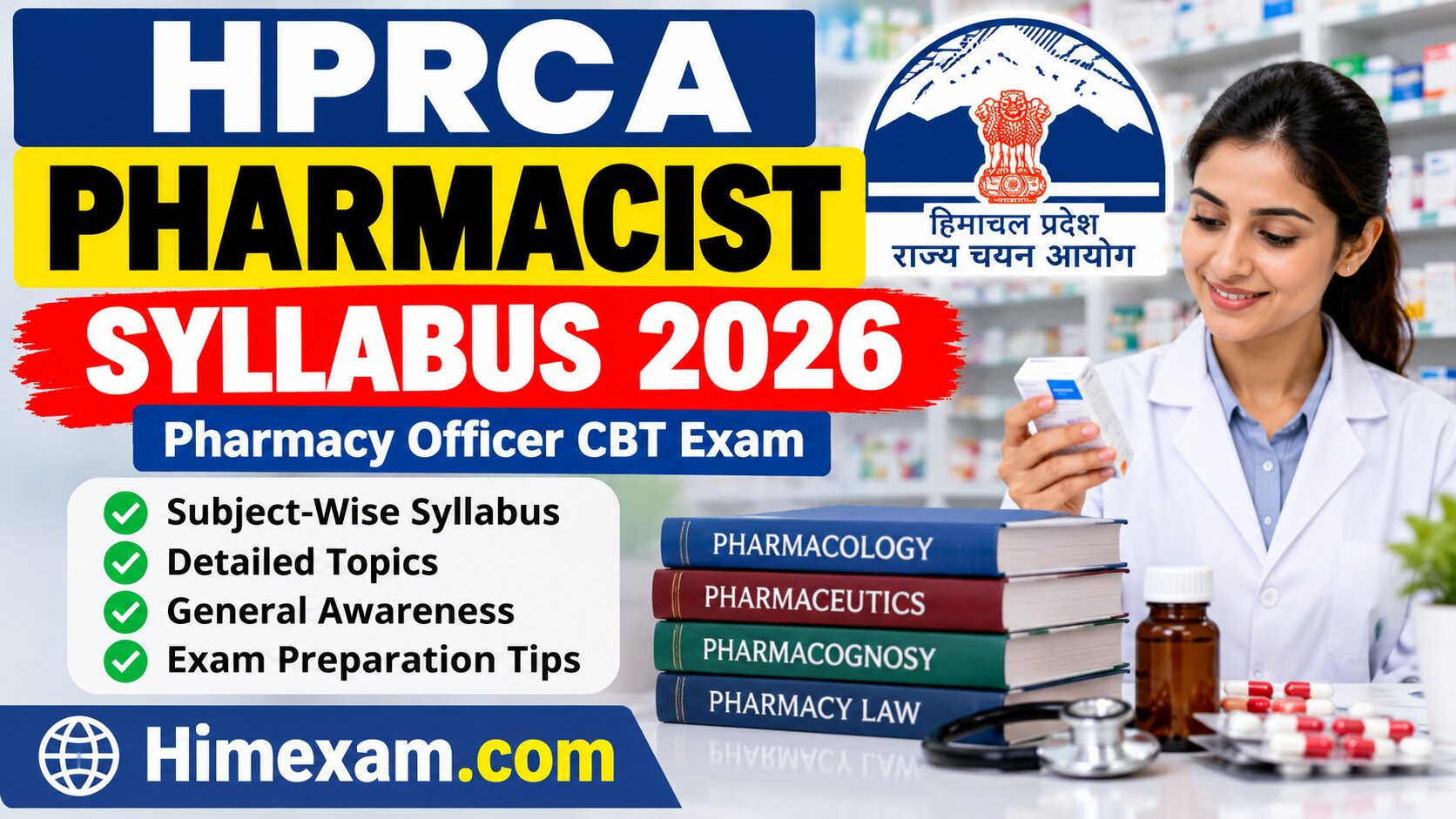
HPRCA Pharmacist Syllabus 2026: The Himachal Pradesh Rajya Chayan Aayog (HPRCA) has prescribed a detailed syllabus for the Pharmacist (Pharmacy Officer) CBT Exam. The syllabus covers major pharmacy subjects along with General Awareness, Himachal Pradesh General Knowledge, Current Affairs, Everyday Science, Logical Reasoning, Social Science, General English and General Hindi.
Candidates preparing for the HPRCA Pharmacist examination should carefully review the complete subject-wise syllabus and plan their preparation accordingly. The official syllabus includes both core pharmacy subjects and general awareness sections.
Level: Pharmacy / Pharmacy Officer
Mode: Computer Based Test (CBT)
Subjects: Pharmacy Subjects + General Awareness
HPRCA Pharmacist Syllabus 2026 – Subject-Wise Details
The pharmacy syllabus is divided into major subjects including Pharmaceutical Chemistry, Biochemistry, Pharmacotherapeutics, Human Anatomy & Physiology, Pharmacology, Pharmaceutics, Pharmacognosy, Social Pharmacy, Dispensing/Hospital & Clinical Pharmacy, and Pharmacy Law & Ethics.
1. Pharmaceutical Chemistry
The Pharmaceutical Chemistry section covers fundamental pharmaceutical chemistry concepts, analytical methods, pharmaceutical formulations and medicinal chemistry.
- Errors, sources and types of errors
- Methods of minimizing errors
- Accuracy, precision and significant figures
- Pharmacopoeia – IP, BP, USP, NF and Extra Pharmacopoeia
- Sources and types of impurities
- Limit tests for chloride, sulphate, iron, arsenic, lead and heavy metals
- Acid-base titration and its classification
- Theories of acid-base titration
- Indicators
- Non-aqueous titration
- Precipitation titration – Mohr’s, Volhard’s, Modified Volhard’s and Fajans methods
- Complexometric titration
- Metal ion indicators
- Masking and demasking reagents
- Gravimetric analysis
- Co-precipitation and post-precipitation
- Redox titrations
- Pharmaceutical formulations, market preparations, storage conditions and uses
- Dental products and haematinics
- Gastrointestinal agents
- Topical agents and medicinal gases
- Heterocyclic chemistry
- Classification and IUPAC nomenclature of drugs
- Mechanism of action, medicinal uses, stability and storage of important drug classes
Important drug groups include anaesthetics, sedatives and hypnotics, antipsychotics, anticonvulsants, antidepressants, adrenergic drugs, anti-arrhythmic drugs, antihypertensive agents, antianginal agents, diuretics, hypoglycemic agents, analgesics, NSAIDs, antibiotics, antifungals, anti-tubercular drugs, antiviral agents, antimalarials, antineoplastic agents, antihistaminics and drugs acting on the endocrine system. :contentReference[oaicite:1]{index=1}
2. Biochemistry
The Biochemistry syllabus focuses on cellular organization, metabolism, enzymes, nucleic acids and vitamins.
- Cell structure and organization
- Biological oxidation
- Electron transport chain and oxidative phosphorylation
- Inhibitors of ETC and oxidative phosphorylation
- Carbohydrates – structure and classification
- Glycolysis – pathway, energetics and significance
- Citric acid cycle
- Lipid structure, classification and metabolism
- Beta oxidation of saturated fatty acids
- Ketogenesis, ketolysis and ketoacidosis
- Fatty liver, hypercholesterolemia, atherosclerosis and obesity
- Protein structure and classification
- Amino acid metabolism
- Transamination and deamination
- Urea cycle and decarboxylation
- Disorders of ammonia metabolism
- Phenylketonuria, albinism and alkaptonuria
- Enzymes and enzyme classification
- Enzyme inhibitors
- Therapeutic and diagnostic applications of enzymes
- Nucleic acids, DNA and RNA
- Purine and pyrimidine nucleotide biosynthesis
- Vitamins and coenzymes
- Deficiency diseases of fat-soluble and water-soluble vitamins
- Qualitative tests and functions of carbohydrates, lipids and proteins
3. Pharmacotherapeutics & Pathophysiology
This section covers the pathophysiology, clinical manifestations and management of important diseases. Candidates should prepare both non-pharmacological and pharmacological management aspects.
- General introduction to pharmacotherapeutics
- Essential Medicines List
- Standard Treatment Guidelines
- Hypertension
- Angina and myocardial infarction
- Hyperlipidaemia
- Congestive heart failure
- Asthma and COPD
- Diabetes
- Thyroid disorders
- Epilepsy
- Parkinson’s disease
- Alzheimer’s disease
- Stroke and migraine
- Gastro-oesophageal reflux disease
- Peptic ulcer disease
- Alcoholic liver disease
- Inflammatory bowel diseases
- Iron deficiency and megaloblastic anaemia
- Tuberculosis and pneumonia
- Urinary tract infections
- Hepatitis
- Gonorrhoea and syphilis
- Malaria and viral infections
- HIV and opportunistic infections
- Rheumatoid arthritis and osteoarthritis
- Psoriasis, scabies and eczema
- Depression, anxiety and psychosis
- Conjunctivitis and glaucoma
- Polycystic ovary syndrome
- Dysmenorrhea and premenstrual syndrome
4. Human Anatomy & Physiology
- General aspects of anatomy and physiology
- Anatomical terminology
- Cellular level of organization
- Tissue level of organization
- Osseous system
- Haemopoietic system
- Lymphatic system
- Cardiovascular system
- Respiratory system
- Digestive system
- Skeletal muscles
- Nervous system
- Sense organs
- Urinary system
- Endocrine system
- Reproductive system
- Haematological diseases
The syllabus specifically includes gross morphology, anatomy and physiology of major human body systems. :contentReference[oaicite:2]{index=2}
5. Pharmacology
Pharmacology covers general pharmacology, drug administration, pharmacokinetics, pharmacodynamics and the pharmacology of major therapeutic drug groups.
- General Pharmacology
- Routes of drug administration
- ADME and factors affecting ADME
- Bioavailability and biotransformation
- Drug excretion
- Pharmacodynamics
- Mechanisms of drug action
- Factors modifying drug action
- Cholinergic and anticholinergic drugs
- Adrenergic and anti-adrenergic drugs
- Neuromuscular blocking agents
- Drugs used in myasthenia gravis
- Local anaesthetic agents
- NSAIDs
- Drugs acting on the eye
- General anaesthetics
- Hypnotics and sedatives
- Anticonvulsant, anti-anxiety, antidepressant and antipsychotic drugs
- Opioid analgesics
- Cardiovascular drugs
- Diuretics and antidiuretics
- Anti-ulcer, antiemetic, laxative and antidiarrheal drugs
- Haematinics, anticoagulants, antiplatelet and thrombolytic drugs
- Bronchodilators, expectorants, antitussives and mucolytics
- Antibiotics and chemotherapeutic agents
- Antitubercular, antifungal and antiviral drugs
- Antimalarial and antineoplastic agents
- Thyroid and antithyroid drugs
- Insulin and oral hypoglycemic agents
- Sex hormones and oral contraceptives
- Corticosteroids
6. Pharmaceutics
- Dosage forms – definitions and classification
- Prescription and its components
- Handling of prescriptions
- Prescription errors
- Packaging materials
- Pharmaceutical aids
- Preservatives
- Size reduction and size separation
- Mixing and filtration
- Evaporation and drying
- Extraction and distillation
- Centrifugation
- Manufacturing of tablets and capsules
- Liquid dosage forms
- Topical, nasal and ear preparations
- Powders and granules
- Sterile formulations
- Immunological products
- Quality Assurance and Quality Control
- Good Laboratory Practices
- Current Good Manufacturing Practice
- Pilot plant and scale-up techniques
- Calibration and validation
- Regulatory requirements for drug approval
These topics are specifically included in the prescribed Pharmaceutics section. :contentReference[oaicite:3]{index=3}
7. Pharmacognosy
- Definition, history, present status and scope of Pharmacognosy
- Classification of natural drugs
- Alphabetical, morphological and taxonomical classification
- Chemical and pharmacological classification
- Chemo-taxonomical and sero-taxonomical classification
- Adulteration of drugs of natural origin
- Organoleptic, microscopic, physical, chemical and biological evaluation
- Alkaloids
- Terpenoids
- Glycosides
- Volatile oils
- Tannins and resins
- Biological sources and chemical constituents of crude drugs
- Therapeutic and commercial applications
- Plant fibres used as surgical dressings
- Pharmacognosy in Ayurveda, Unani, Siddha and Homeopathy
- Ayurvedic formulations
- Medicinal and aromatic plants
- Herbal formulations
- Herbal-drug and herb-food interactions
- Herbal cosmetics
- Nutraceuticals and herbal excipients
8. Social Pharmacy
- Definition and scope of Social Pharmacy
- Role of pharmacists in public health
- Concept of health and disease
- Social and health education
- Hygiene and health
- Effect of environment on health
- Psychosocial pharmacy
- Macronutrients and micronutrients
- Balanced diet and malnutrition
- Nutrition deficiency diseases
- Ill effects of junk foods
- Calorific and nutritive values of foods
- Dietary supplements and nutraceuticals
- Epidemiology and its applications
- Epidemic, pandemic and endemic
- Modes of transmission
- Outbreak, quarantine and isolation
- Incubation period and contact tracing
- Morbidity and mortality
- Communicable diseases and their prevention
- National health programmes
- Role of pharmacists in public health education
The syllabus includes communicable diseases such as respiratory and intestinal infections, arthropod-borne infections, HIV/AIDS and other conditions, along with major national health programmes. :contentReference[oaicite:4]{index=4}
9. Dispensing Pharmacy, Hospital & Clinical Pharmacy and Community Pharmacy
- Hospital organization
- Hospital pharmacy and its organization
- Hospital committees
- Compounding in hospitals
- Drug distribution systems
- Supply chain and inventory control
- Drug purchase and inventory management
- Hospital education and training programmes
- Radiopharmaceutical storage, dispensing and disposal
- Clinical pharmacy and its functions
- Responsibilities of clinical pharmacists
- OTC sales
- Pharmaceutical care
- Clinical laboratory tests
- Interpretation of laboratory test results
- Haematological and cardiac investigations
- Fluid and electrolyte balance
- Pulmonary function tests
- Poisoning and antidotes
- Drug and Poison Information Centres
- Pharmacovigilance
- Adverse drug reactions
- Medication errors
- LASA drugs and Tallman lettering
- Good Pharmacy Practice
- Standard Operating Procedures
- Patient counselling
- Medication adherence
- Health screening services
- Community Pharmacy Management
Hospital, clinical and community pharmacy topics form a substantial part of the syllabus, including pharmacovigilance, medication errors and patient counselling. :contentReference[oaicite:5]{index=5}
10. Pharmacy Law & Ethics
This section focuses on important pharmacy-related laws, regulatory bodies, ethics, clinical trials and pharmaceutical regulations.
- General principles of law
- History of pharmacy legislation
- Pharmacy Act, 1948 and Rules
- Drugs and Cosmetics Act, 1940 and Rules, 1945
- Medicinal and Toilet Preparations Act, 1955
- Poisons Act, 1919
- Prevention of Cruelty to Animals Act, 1960
- Drugs and Magic Remedies (Objectionable Advertisements) Act, 1954
- Narcotic Drugs and Psychotropic Substances Act, 1985
- Pharmaceutical legislation
- Code of Pharmaceutical Ethics
- Medical Termination of Pregnancy Act
- Right to Information Act
- Intellectual Property Rights
- CDSCO and Indian Pharmacopoeia Commission
- Good Regulatory Practices
- BCS classification system
- Clinical trials
- ANDA and NDA
- New Drug Development
- New Drugs and Clinical Trials Rules, 2019
- Brand versus Generic drugs
- Trade name concept
- Patent Law
- Blood bank requirements and functions
- Clinical Establishment Act and Rules
- Biomedical Waste Management Rules, 2016
- Bioethics and ethical guidelines
- Consumer Protection Act
- Medical devices and their regulation
The official syllabus also mentions CDSCO, Indian Pharmacopoeia Commission, BCS classification, clinical trials, NDA/ANDA, New Drugs and Clinical Trials Rules, 2019, patent law and medical device regulation. :contentReference[oaicite:6]{index=6}
HPRCA Pharmacist General Awareness Syllabus
In addition to pharmacy subjects, candidates should prepare the General Awareness section. The syllabus specifies the following areas:
- General Knowledge: Including General Knowledge of Himachal Pradesh
- Current Affairs
- Everyday Science
- Logical Reasoning
- Social Science: 10th standard
- General English: 10th standard
- General Hindi: 10th standard
These General Awareness components are specifically listed in the final section of the uploaded HPRCA Pharmacist syllabus. :contentReference[oaicite:7]{index=7}
How to Prepare for HPRCA Pharmacist CBT Exam
Candidates should divide their preparation into two broad areas: core pharmacy subjects and general awareness. Start with the fundamental concepts of Pharmaceutical Chemistry, Pharmaceutics, Pharmacology, Biochemistry and Human Anatomy & Physiology. Then focus on Pharmacotherapeutics, Pharmacognosy, Social Pharmacy, Hospital & Clinical Pharmacy and Pharmacy Law & Ethics.
Regular revision is particularly important for drug classifications, mechanisms of action, pharmaceutical laws, important definitions, pharmacological concepts, disease management and laboratory-related topics.
Preparation Strategy
- Read the complete syllabus before starting preparation.
- Divide the syllabus into subject-wise study targets.
- Build strong fundamentals in core pharmacy subjects.
- Prepare important drug classes and their therapeutic applications.
- Revise pharmacy laws and important regulatory provisions regularly.
- Practice objective questions after completing each topic.
- Prepare Himachal Pradesh General Knowledge and Current Affairs separately.
- Revise General Hindi, General English, Reasoning and Everyday Science.
- Attempt CBT-based mock tests to improve speed and accuracy.
- Analyse mistakes after every mock test and revise weak areas.
HPRCA Pharmacist Syllabus 2026 – Quick Overview
| Section | Major Areas |
|---|---|
| Pharmaceutical Chemistry | Pharmaceutical chemistry, analysis, formulations and medicinal chemistry |
| Biochemistry | Metabolism, enzymes, nucleic acids and vitamins |
| Pharmacotherapeutics | Diseases, pathophysiology and pharmacological management |
| Human Anatomy & Physiology | Human body systems, organs and physiology |
| Pharmacology | ADME, pharmacodynamics and therapeutic drug classes |
| Pharmaceutics | Dosage forms, manufacturing, QA/QC and regulations |
| Pharmacognosy | Natural drugs, crude drugs, phytoconstituents and herbal products |
| Social Pharmacy | Public health, nutrition, epidemiology and health programmes |
| Hospital & Clinical Pharmacy | Hospital pharmacy, clinical pharmacy, pharmacovigilance and community pharmacy |
| Pharmacy Law & Ethics | Pharmacy laws, regulations, ethics, clinical trials and drug regulators |
| General Awareness | HP GK, Current Affairs, Science, Reasoning, Social Science, English and Hindi |
हमारे बारे में – Himexam.com
Himexam.com हिमाचल प्रदेश व अखिल भारतीय प्रतियोगी परीक्षाओं के लिए एक विश्वसनीय पोर्टल है। यहाँ आपको नवीनतम HP Govt Jobs, All India Jobs, HP GK, करेंट अफेयर्स, वन लाइनर प्रश्न, जिलेवार GK और पिछले वर्षों के प्रश्न पत्र की जानकारी एक ही जगह मिलती है। हमारी कोशिश है कि हर अभ्यर्थी को सही और समय पर अध्ययन सामग्री मिले।
 WhatsApp
 Facebook
 Telegram
 Instagram