




पझौता किसान आंदोलन (1939–1945) | Pajhota Peasant Movement in Sirmaur, Himachal Pradesh
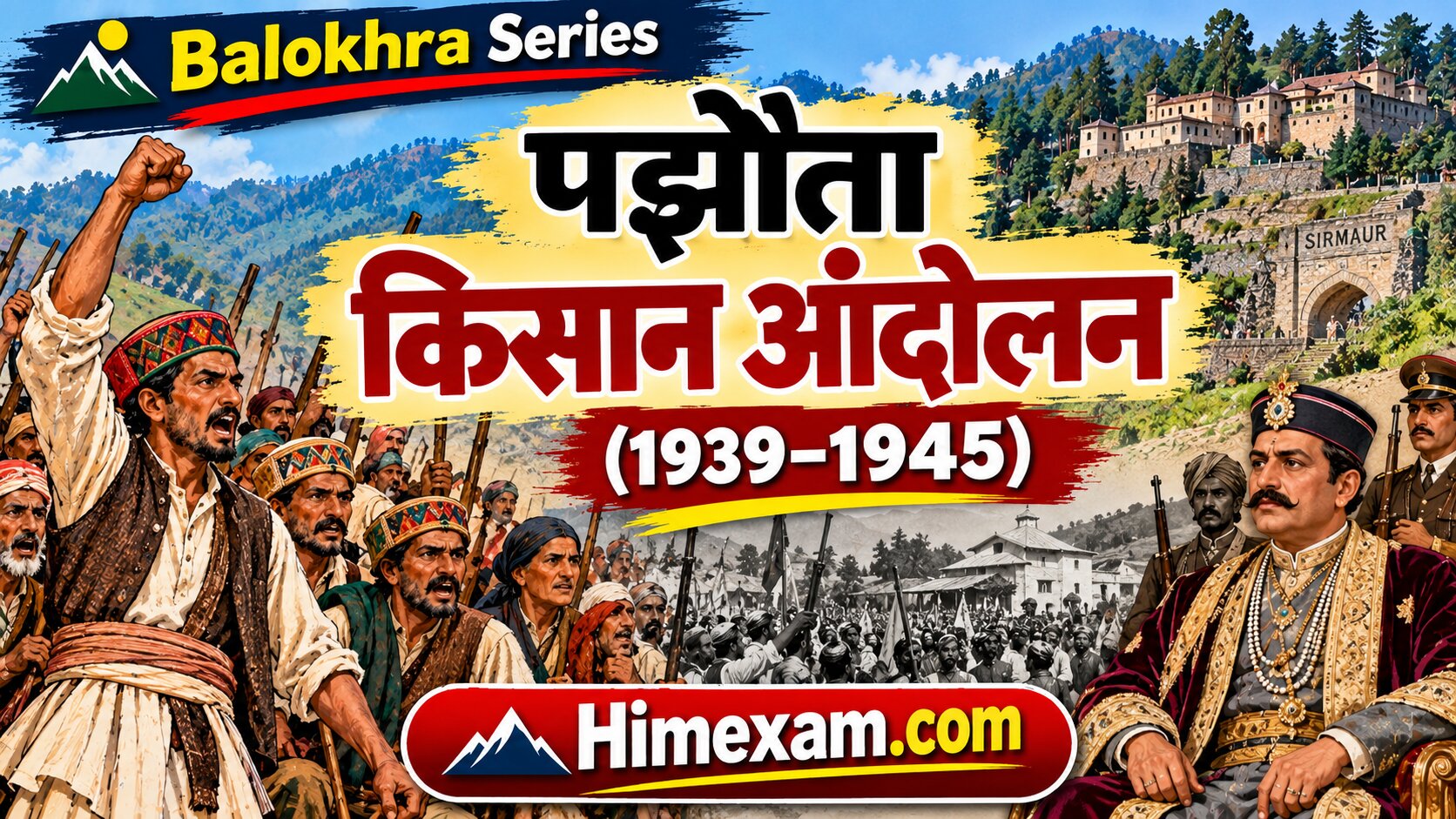
पझौता किसान आंदोलन हिमाचल प्रदेश के सिरमौर रियासत के इतिहास में एक महत्वपूर्ण किसान आंदोलन था। यह आंदोलन मुख्य रूप से वर्ष 1942–43 में सिरमौर के ऊपरी क्षेत्र पझौता में किसानों द्वारा रियासती शासन की नीतियों, बेगार, अनुचित करों और प्रशासनिक उत्पीड़न के विरोध में चलाया गया। इस आंदोलन की ऐतिहासिक अवधि को सामान्यतः 1939–1945 के संदर्भ में प्रस्तुत किया जाता है।
The Pajhota Peasant Movement (1939–1945) was an important peasant movement in the history of the former Sirmaur princely state in Himachal Pradesh. During 1942–43, peasants in the upper Pajhota region protested against the policies of the princely administration, forced labour (begar), unfair levies and administrative oppression.
1. पझौता किसान आंदोलन की पृष्ठभूमि | Background of the Pajhota Peasant Movement
द्वितीय विश्व युद्ध (1939–1945) के दौरान खाद्यान्न की कमी और महँगाई जैसी समस्याओं ने आम लोगों की परेशानियाँ बढ़ा दी थीं। इसी समय बंगाल में भीषण अकाल पड़ा था। सिरमौर रियासत में किसानों पर अनाज संबंधी प्रतिबंध लगाए गए। किसानों को अपने पास सीमित मात्रा में अनाज रखने और शेष अनाज सरकारी सहकारी समितियों को बेचने के निर्देश दिए गए।
During the Second World War (1939–1945), food shortages and rising prices increased the hardships of ordinary people. In Sirmaur, restrictions were imposed on the storage and sale of grain. Peasants were instructed to retain only a limited quantity of food grains and sell the remaining produce to government cooperative societies.
2. आंदोलन के प्रमुख कारण | Major Causes of the Movement
-
अनाज संबंधी प्रतिबंध: किसानों को अपनी उपज का एक हिस्सा सरकारी सहकारी समितियों को बेचने के लिए बाध्य किया गया।
Restrictions on food grains: Peasants were required to sell a portion of their produce to government cooperative societies. -
आलू के कम मूल्य: पाठ्य स्रोत के अनुसार, आलू का बाजार भाव लगभग 16 रुपये प्रति मन होने के बावजूद किसानों को इसे राज्य की सहकारी समितियों को 3 रुपये प्रति मन की दर से देने के कठोर आदेश दिए गए।
Low procurement price for potatoes: According to the source, despite a market price of around ₹16 per maund, peasants were ordered to supply potatoes to state cooperative societies at ₹3 per maund. -
बेगार प्रथा: लोगों से बिना उचित पारिश्रमिक के काम करवाया जाता था।
Forced labour (Begar): People were compelled to provide labour without adequate remuneration. -
अनुचित कर और शुल्क: चराई, रीत-विवाह आदि पर अनुचित कर लगाए जाने से ग्रामीण जनता में असंतोष था।
Unfair taxes and levies: Unreasonable charges associated with grazing, marriage customs and other activities contributed to public resentment. -
प्रशासनिक उत्पीड़न: रिश्वतखोरी, झूठे मुकदमों और अधिकारियों के दुर्व्यवहार से लोग परेशान थे।
Administrative oppression: Corruption, false legal cases and the misconduct of officials added to public grievances.
3. पझौता किसान सभा का गठन | Formation of the Pajhota Kisan Sabha
किसानों की समस्याओं के समाधान के लिए पझौता क्षेत्र के लोगों ने अक्टूबर 1942 में टपरौली गाँव में एकत्र होकर बैठक की। इस बैठक में आंदोलन को संगठित रूप देने के उद्देश्य से पझौता किसान सभा का गठन किया गया। सभा ने विभिन्न जातियों, वर्गों और धर्मों के लोगों को एकजुट करने पर बल दिया।
In October 1942, people from the Pajhota region assembled at Taproli village to discuss their grievances. During this meeting, the Pajhota Kisan Sabha was formed to organise the movement. The Sabha emphasised unity among people belonging to different castes, social classes and religions.
प्रमुख नेता एवं पदाधिकारी | Important Leaders and Office-Bearers
- लक्ष्मी सिंह (Laxmi Singh): प्रारंभ में किसान सभा के प्रधान चुने गए।
- वैद्य सूरत सिंह (Vaidya Surat Singh): किसान सभा के सचिव तथा आंदोलन के प्रमुख संचालकों में से एक थे।
- मदन सिंह (Madan Singh): बाद में धामला गाँव के प्रधान बनाए गए।
- मियाँ गुलाब सिंह (Miyan Gulab Singh): आंदोलन से जुड़े प्रमुख व्यक्तियों में शामिल थे।
- अमर सिंह (Amar Singh): आंदोलन से संबंधित प्रमुख कार्यकर्ताओं में से एक थे।
- कालीराम (Kaliram): आंदोलन में सक्रिय भूमिका निभाने वाले व्यक्तियों में शामिल थे।
स्रोत में चूंचू मियाँ, मेहर सिंह, जालम सिंह और अन्य स्थानीय व्यक्तियों का भी उल्लेख मिलता है। समय के साथ संगठन के नेतृत्व में बदलाव हुए और मदन सिंह को धामला गाँव का प्रधान बनाया गया।
Other individuals mentioned in the historical account include Chunchun Miyan, Mehar Singh, Jalam Singh and several local activists. The leadership structure changed over time, and Madan Singh was subsequently appointed headman of Dhamla village.
4. वैद्य सूरत सिंह की भूमिका | Role of Vaidya Surat Singh
वैद्य सूरत सिंह आंदोलन के संचालन और संगठन में महत्वपूर्ण भूमिका निभा रहे थे। उन्होंने सिरमौर के शासक राजेन्द्र प्रकाश से अनुरोध किया कि वे क्षेत्र का दौरा करके जनता की वास्तविक समस्याओं को समझें। आंदोलनकारी चाहते थे कि राजा स्वयं लोगों की शिकायतें सुनें और बेगार, भ्रष्टाचार तथा प्रशासनिक उत्पीड़न जैसी समस्याओं पर कार्रवाई करें।
Vaidya Surat Singh played an important role in organising and directing the movement. He appealed to Sirmaur ruler Rajendra Prakash to visit the affected region and understand the people’s grievances. The protesters wanted the ruler to personally hear their complaints and address forced labour, corruption and administrative oppression.
5. आंदोलन का दमन और सैनिक शासन | Suppression of the Movement and Military Rule
आंदोलन की माँगों पर विचार करने के बजाय रियासती प्रशासन ने इसे दबाने के लिए कदम उठाए। रामस्वरूप के नेतृत्व में पुलिस को धामला और हाब्बन क्षेत्र में भेजा गया, लेकिन पुलिस आंदोलन को समाप्त करने में सफल नहीं हो सकी। इसके बाद पूरे पझौता क्षेत्र को सैनिक शासन के अधीन कर दिया गया।
Instead of adequately addressing the protesters’ demands, the princely administration attempted to suppress the movement. Police were sent to the Dhamla and Habban areas under the leadership of Ramswaroop, but the movement could not be suppressed. Subsequently, the entire Pajhota region was placed under military rule.
आंदोलन के दौरान हिंसा और संपत्ति को नुकसान पहुँचाने की घटनाएँ भी हुईं। ऐतिहासिक विवरण के अनुसार, आंदोलनकारी कालीराम का मकान जला दिया गया तथा वैद्य सूरत सिंह के मकान को डायनामाइट से उड़ा दिया गया। कमना नामक एक व्यक्ति की गोली लगने से मृत्यु हो गई।
The historical account also records incidents of violence and property destruction. The house of activist Kaliram was burnt, the house of Vaidya Surat Singh was demolished with dynamite, and a person named Kamna died after being shot.
6. गिरफ्तारियाँ और न्यायिक कार्रवाई | Arrests and Judicial Proceedings
सैनिक शासन लागू होने और गोलीकांड के बाद सेना तथा पुलिस ने आंदोलन के प्रमुख व्यक्तियों को गिरफ्तार किया। स्रोत के अनुसार, गिरफ्तार आंदोलनकारियों की संख्या 69 थी। कुछ लोग भागकर जुब्बल रियासत में चले गए, जहाँ के राजा भक्त चन्द ने उन्हें शरण दी।
Following the imposition of military rule and the shooting incidents, the army and police arrested leading participants. According to the historical account, 69 activists were arrested. Some escaped to the neighbouring Jubbal princely state, where Raja Bhakt Chand provided them refuge.
नाहन में एक न्यायाधिकरण के माध्यम से आंदोलनकारियों पर मुकदमे चलाए गए। दिए गए विवरण के अनुसार, 14 लोगों को रिहा कर दिया गया, तीन लोगों को दो-दो वर्ष तथा 52 लोगों को आजीवन कारावास की सजा सुनाई गई। बाद में कुछ सजाओं को कम करके दस और पाँच वर्ष के कारावास में बदल दिया गया।
A tribunal in Nahan conducted proceedings against the arrested activists. According to the account, 14 people were released, three were sentenced to two years each, and 52 received life imprisonment. Some sentences were subsequently reduced to ten years and five years of imprisonment.
7. आंदोलनकारियों की रिहाई | Release of the Activists
आंदोलन के दौरान गिरफ्तार किए गए कई कार्यकर्ताओं को लंबे समय तक कारावास में रहना पड़ा। उपलब्ध विवरण के अनुसार, वैद्य सूरत सिंह, बस्तीराम पहाड़ी और चेत सिंह वर्मा सहित कुछ आंदोलनकारियों को मार्च 1948 में रिहा किया गया।
Several activists spent a long period in prison following their arrest. According to the historical account, some participants, including Vaidya Surat Singh, Bastiram Pahari and Chet Singh Verma, were released in March 1948.
8. पझौता किसान आंदोलन का ऐतिहासिक महत्व | Historical Significance
- यह सिरमौर रियासत में किसानों के अधिकारों और आर्थिक समस्याओं से जुड़ा एक महत्वपूर्ण आंदोलन था।
- इसने बेगार, अनुचित करों और प्रशासनिक उत्पीड़न के विरुद्ध ग्रामीण जनता के असंतोष को सामने रखा।
- पझौता किसान सभा ने स्थानीय किसानों को संगठित करने में महत्वपूर्ण भूमिका निभाई।
- आंदोलन हिमाचल प्रदेश की रियासती व्यवस्था के विरुद्ध हुए जनसंघर्षों के इतिहास का महत्वपूर्ण हिस्सा है।
- It was an important movement concerning peasant rights and economic grievances in the Sirmaur princely state.
- It highlighted rural opposition to forced labour, unfair levies and administrative oppression.
- The Pajhota Kisan Sabha played a significant role in organising local peasants.
- The movement forms an important part of the history of popular resistance against princely rule in Himachal Pradesh.
9. परीक्षा के लिए महत्वपूर्ण तथ्य | Important Facts for Competitive Exams
| प्रश्न / Particular | उत्तर / Answer |
|---|---|
| आंदोलन / Movement | पझौता किसान आंदोलन / Pajhota Peasant Movement |
| रियासत / Princely State | सिरमौर / Sirmaur |
| प्रमुख सक्रिय अवधि / Main Active Period | 1942–1943 |
| किसान सभा के गठन की बैठक / Kisan Sabha Formation Meeting | अक्टूबर 1942, टपरौली गाँव / October 1942, Taproli village |
| संगठन / Organisation | पझौता किसान सभा / Pajhota Kisan Sabha |
| प्रारंभिक प्रधान / Initial President | लक्ष्मी सिंह / Laxmi Singh |
| प्रमुख सचिव / Secretary | वैद्य सूरत सिंह / Vaidya Surat Singh |
| सिरमौर के शासक / Ruler of Sirmaur | राजेन्द्र प्रकाश / Rajendra Prakash |
| मुकदमे का स्थान / Place of Tribunal | नाहन / Nahan |
| रिहाई का उल्लेखित समय / Reported Release Period | मार्च 1948 / March 1948 |
MCQ:-
Question 1: सिरमौर रियासत का पझौता किसान आंदोलन मुख्य रूप से किस अवधि के दौरान चला? / During which period did the Pajaota Peasant Movement in Sirmaur State primarily take place?
(a) 1920–1925 ई. / 1920–1925 AD (b) 1930–1935 ई. / 1930–1935 AD (c) 1939–1945 ई. / 1939–1945 AD (d) 1946–1950 ई. / 1946–1950 AD
Answer: (c) 1939–1945 ई. / 1939–1945 AD
Question 2: सिरमौर के ऊपरी क्षेत्र में पझौता किसान आंदोलन का प्रमुख चरण किस अवधि में देखने को मिला? / During which period was the major phase of the Pajaota Peasant Movement in the upper region of Sirmaur observed?
(a) 1939–1940 ई. / 1939–1940 AD (b) 1940–1941 ई. / 1940–1941 AD (c) 1942–1943 ई. / 1942–1943 AD (d) 1944–1945 ई. / 1944–1945 AD
Answer: (c) 1942–1943 ई. / 1942–1943 AD
Question 3: पझौता किसान आंदोलन के समय द्वितीय विश्वयुद्ध के साथ–साथ किस बड़े संकट का उल्लेख किया गया है? / Which major crisis, alongside the Second World War, is mentioned in the account of the Pajaota Peasant Movement?
(a) बंगाल का अकाल / Bengal Famine (b) दक्कन का अकाल / Deccan Famine (c) चंपारण का अकाल / Champaran Famine (d) मद्रास का अकाल / Madras Famine
Answer: (a) बंगाल का अकाल / Bengal Famine
Question 4: पझौता किसान सभा का गठन किस महीने और वर्ष में किया गया था? / In which month and year was the Pajaota Kisan Sabha formed?
(a) अगस्त 1941 / August 1941 (b) अक्टूबर 1942 / October 1942 (c) जनवरी 1943 / January 1943 (d) मार्च 1945 / March 1945
Answer: (b) अक्टूबर 1942 / October 1942
Question 5: पझौता किसान सभा की पहली बैठक कहाँ आयोजित की गई थी? / Where was the first meeting of the Pajaota Kisan Sabha held?
(a) नाहन / Nahan (b) राजगढ़ / Rajgarh (c) टपरौली / Taproli (d) जुब्बल / Jubbal
Answer: (c) टपरौली / Taproli
Question 6: पझौता किसान सभा के गठन के समय इसके प्रधान और सचिव क्रमशः कौन चुने गए थे? / Who were elected president and secretary, respectively, at the formation of the Pajaota Kisan Sabha?
(a) मदन सिंह और कालिराम / Madan Singh and Kaliram (b) लक्ष्मी सिंह और वैद्य सूरत सिंह / Lakshmi Singh and Vaidya Surat Singh (c) अमर सिंह और मियाँ गुलाब सिंह / Amar Singh and Mian Gulab Singh (d) भक्त चन्द और बस्तीराम पहाड़ी / Bhakt Chand and Bastiram Pahari
Answer: (b) लक्ष्मी सिंह और वैद्य सूरत सिंह / Lakshmi Singh and Vaidya Surat Singh
Question 7: पझौता किसान आंदोलन का समूचा नियंत्रण एवं संचालन मुख्य रूप से किसके अधीन था? / Under whose control was the overall management of the Pajaota Peasant Movement?
(a) राजा राजेन्द्र प्रकाश / Raja Rajendra Prakash (b) वैद्य सूरत सिंह / Vaidya Surat Singh (c) भक्त चन्द / Bhakt Chand (d) मदन सिंह / Madan Singh
Answer: (b) वैद्य सूरत सिंह / Vaidya Surat Singh
Question 8: पझौता किसान आंदोलन के दौरान किसानों की प्रमुख शिकायतों में कौन–सी शामिल थी? / Which of the following was among the major grievances of peasants during the Pajaota Movement?
(a) बेगार प्रथा और रियासती अधिकारियों का दुर्व्यवहार / Forced labour and misconduct by princely-state officials (b) पृथक हिमाचल प्रदेश की तत्काल स्थापना / Immediate establishment of a separate Himachal Pradesh (c) अंग्रेजों से पूर्ण स्वतंत्रता की घोषणा / Declaration of complete independence from the British (d) केवल वन अधिकारों का विस्तार / Expansion of forest rights alone
Answer: (a) बेगार प्रथा और रियासती अधिकारियों का दुर्व्यवहार / Forced labour and misconduct by princely-state officials
Question 9: पझौता आंदोलन के दौरान आलू का निर्धारित सरकारी खरीद मूल्य कितना था? / What was the prescribed government procurement price of potatoes during the Pajaota Movement?
(a) ₹2 प्रति मन / ₹2 per maund (b) ₹3 प्रति मन / ₹3 per maund (c) ₹5 प्रति मन / ₹5 per maund (d) ₹16 प्रति मन / ₹16 per maund
Answer: (b) ₹3 प्रति मन / ₹3 per maund
Question 10: पझौता आंदोलन को दबाने के लिए पुलिस किन स्थानों पर भेजी गई थी? / To which places was the police sent to suppress the Pajaota Movement?
(a) टपरौली और नाहन / Taproli and Nahan (b) धामला और हाब्बन / Dhamla and Habban (c) जुब्बल और राजगढ़ / Jubbal and Rajgarh (d) कटोगड़ा और पेंगुफर / Katogda and Pengufar
Answer: (b) धामला और हाब्बन / Dhamla and Habban
Question 11: पझौता आंदोलन के दौरान पूरे पझौता क्षेत्र को किस व्यवस्था के अधीन कर दिया गया था? / Under which system was the entire Pajaota region placed during the movement?
(a) नागरिक प्रशासन / Civil administration (b) सैनिक शासन / Military rule (c) पंचायत शासन / Panchayat administration (d) ब्रिटिश संसदीय शासन / British parliamentary administration
Answer: (b) सैनिक शासन / Military rule
Question 12: पझौता किसान आंदोलन के दौरान कितने आंदोलनकारियों को गिरफ्तार किए जाने का उल्लेख मिलता है? / How many protesters are reported to have been arrested during the Pajaota Peasant Movement?
(a) 49 (b) 59 (c) 69 (d) 79
Answer: (c) 69
Question 13: पझौता आंदोलन से संबंधित मुकदमे में कितने लोगों को आजीवन कारावास की सजा सुनाई गई थी? / How many people were sentenced to life imprisonment in the trial related to the Pajaota Movement?
(a) 14 (b) 32 (c) 52 (d) 69
Answer: (c) 52
Question 14: पझौता किसान आंदोलन के दौरान कुछ आंदोलनकारियों ने किस रियासत में शरण ली थी? / In which princely state did some protesters take refuge during the Pajaota Peasant Movement?
(a) बुशहर / Bushahr (b) जुब्बल / Jubbal (c) बिलासपुर / Bilaspur (d) मंडी / Mandi
Answer: (b) जुब्बल / Jubbal
Question 15: पझौता आंदोलन के संदर्भ में ‘भाई दो ना पाई’ नारे का क्या अर्थ था? / What was the meaning of the slogan ‘Bhai Do Na Pai’ in the context of the Pajaota Movement?
(a) कर दो और सेना में भर्ती हो / Pay taxes and join the army (b) न कर देंगे और न सेना में भर्ती होंगे / Neither pay taxes nor join the army (c) भूमि कर आधा कर दो / Reduce land revenue by half (d) किसानों को मुफ्त अनाज दो / Provide free grain to peasants
Answer: (b) न कर देंगे और न सेना में भर्ती होंगे / Neither pay taxes nor join the army
Question 16: पझौता किसान आंदोलन को किस प्रकार के आंदोलन के रूप में वर्णित करना सबसे उपयुक्त है? / Which description best characterises the Pajaota Peasant Movement?
(a) धार्मिक सुधार आंदोलन / Religious reform movement (b) किसानों की आर्थिक एवं प्रशासनिक शिकायतों पर आधारित आंदोलन / A movement based on peasants’ economic and administrative grievances (c) औद्योगिक मजदूर आंदोलन / Industrial workers’ movement (d) भाषा आधारित आंदोलन / Language-based movement
Answer: (b) किसानों की आर्थिक एवं प्रशासनिक शिकायतों पर आधारित आंदोलन / A movement based on peasants’ economic and administrative grievances
हमारे बारे में – Himexam.com
Himexam.com हिमाचल प्रदेश व अखिल भारतीय प्रतियोगी परीक्षाओं के लिए एक विश्वसनीय पोर्टल है। यहाँ आपको नवीनतम HP Govt Jobs, All India Jobs, HP GK, करेंट अफेयर्स, वन लाइनर प्रश्न, जिलेवार GK और पिछले वर्षों के प्रश्न पत्र की जानकारी एक ही जगह मिलती है। हमारी कोशिश है कि हर अभ्यर्थी को सही और समय पर अध्ययन सामग्री मिले।
 WhatsApp
 Facebook
 Telegram
 Instagram