

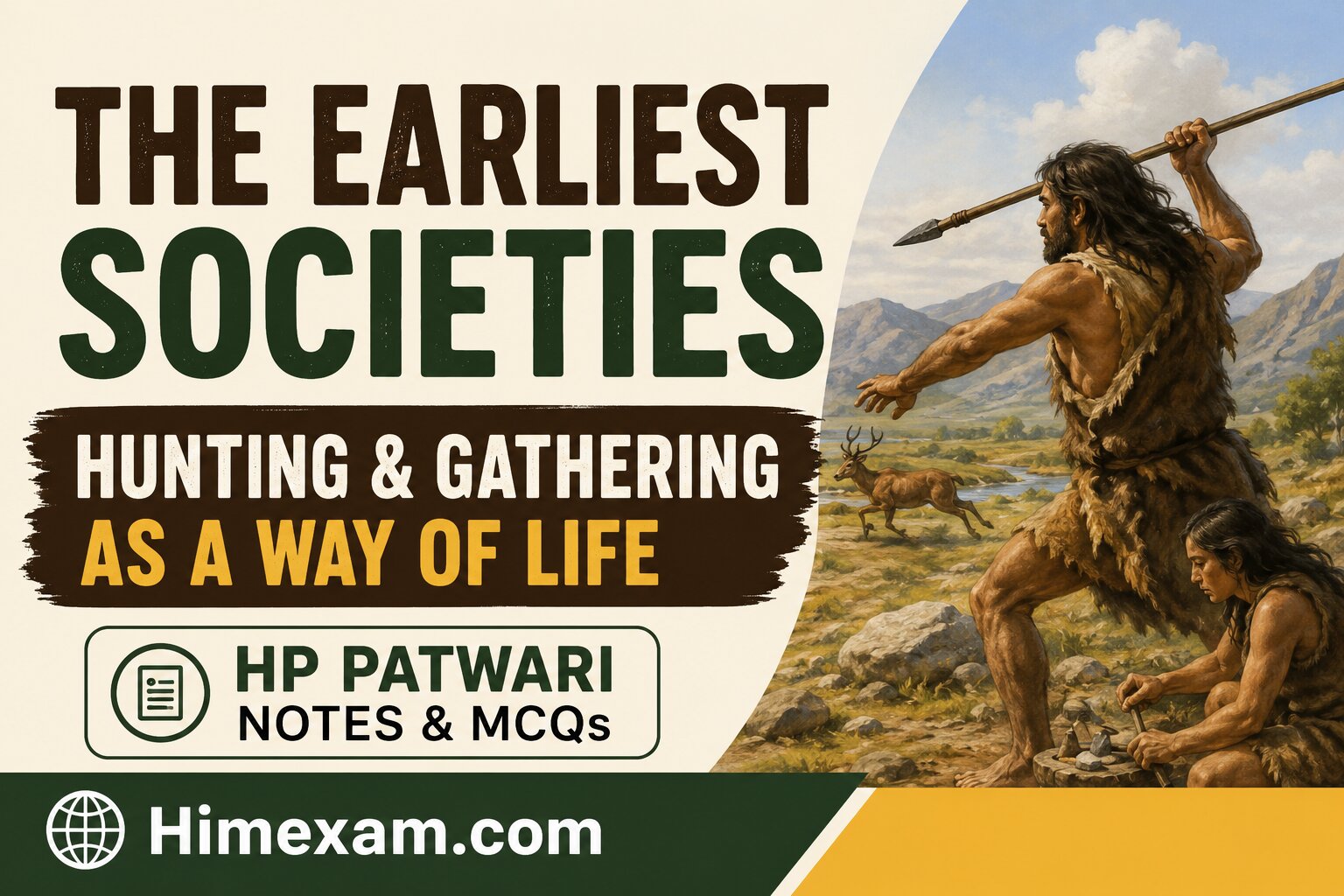


The Earliest Societies – Hunting & Gathering as a Way of Life | HP Patwari Notes & MCQs
Prepare for the HP Patwari Exam with complete bilingual (Hindi & English) notes on The Earliest Societies – Hunting & Gathering as a Way of Life. This topic covers the characteristics of hunter-gatherer societies, nomadic lifestyle, stone tools, discovery of fire, Bhimbetka rock shelters, social organization, food gathering, hunting practices, and the transition to agriculture. The article also includes 20+ important bilingual MCQs based on the latest exam pattern to help you strengthen your History and General Knowledge preparation.


Join HP Patwari Exam Test Series(15 CBT Test With Answer Key):- CLICK HERE
The Earliest Societies – Hunting & Gathering as a Way of Life | HP Patwari Notes & MCQs
1. Introduction (परिचय)
The earliest human societies were hunter-gatherers. Before agriculture was discovered, humans survived by hunting wild animals, fishing, and collecting fruits, roots, seeds, nuts, and honey from forests. This period is called the Palaeolithic (Old Stone Age).
मानव समाज का प्रारम्भ शिकारी एवं खाद्य संग्राहक समाज के रूप में हुआ। कृषि की खोज से पहले मनुष्य जंगली पशुओं का शिकार, मछली पकड़ना तथा जंगलों से फल, कंद–मूल, बीज, मेवे और शहद एकत्र करके जीवनयापन करता था। इस काल को पुरापाषाण काल (Old Stone Age) कहा जाता है।
2. Time Period (समयावधि)
|
English |
हिन्दी |
|
Earliest humans appeared about 2.6 million years ago. |
प्रारम्भिक मानव लगभग 26 लाख वर्ष पूर्व अस्तित्व में आया। |
|
In India, evidence of Palaeolithic culture dates from nearly 2 million years ago. |
भारत में पुरापाषाण संस्कृति के प्रमाण लगभग 20 लाख वर्ष पूर्व से मिलते हैं। |
|
Agriculture began around 10,000 BCE in different parts of the world. |
विश्व के विभिन्न भागों में कृषि लगभग 10000 ईसा पूर्व प्रारम्भ हुई। |
3. Meaning of Hunter-Gatherers (शिकारी एवं खाद्य संग्राहक)
Hunter-gatherers were people who depended on nature for food by:
- Hunting animals
- Fishing
- Collecting fruits
- Gathering roots and tubers
- Collecting seeds and nuts
- Gathering honey
शिकारी एवं खाद्य संग्राहक वे लोग थे जो भोजन के लिए प्रकृति पर निर्भर रहते थे—
- पशुओं का शिकार
- मछली पकड़ना
- फल एकत्र करना
- कंद–मूल संग्रह
- बीज एवं मेवे इकट्ठा करना
- शहद संग्रह
4. Why did Early Humans Move from Place to Place?
(प्रारम्भिक मानव एक स्थान से दूसरे स्थान क्यों जाते थे?)
They moved because:
- Food resources became exhausted.
- Animals migrated.
- Seasonal fruits and plants were available elsewhere.
- Water sources dried up.
- To escape dangerous animals.
- Climate changed.
वे निम्न कारणों से एक स्थान से दूसरे स्थान जाते थे—
- भोजन समाप्त हो जाता था।
- जंगली पशु स्थान बदलते थे।
- मौसमी फल एवं पौधे उपलब्ध होते थे।
- जल स्रोत सूख जाते थे।
- हिंसक पशुओं से बचने हेतु।
- जलवायु परिवर्तन के कारण।
5. Life of Hunter-Gatherers (शिकारी एवं खाद्य संग्राहकों का जीवन)
- Nomadic lifestyle
- Lived in caves and rock shelters
- Used fire
- Wore animal skins and leaves
- Worked together in groups
- Shared food equally
- Had no permanent houses
- घुमंतू जीवन
- गुफाओं एवं शैलाश्रयों में निवास
- आग का प्रयोग
- पशुओं की खाल एवं पत्तों का वस्त्र
- समूह में रहना
- भोजन साझा करना
- स्थायी घर नहीं
6. Importance of Hunting (शिकार का महत्व)
- Main source of meat
- Animal skin used for clothing
- Bones used as tools
- Horns used for weapons
- Fat used as fuel
- मांस प्राप्त होता था
- खाल से वस्त्र बनते थे
- हड्डियों से औजार बनते थे
- सींग हथियार बनाने में उपयोग होते थे
- चर्बी ईंधन के रूप में प्रयुक्त होती थी
7. Importance of Gathering (संग्रह का महत्व)
Gathering often supplied more reliable food than hunting.
Collected:
- Fruits
- Nuts
- Seeds
- Honey
- Tubers
- Roots
- Leaves
कई बार संग्रह से शिकार की अपेक्षा अधिक भोजन मिलता था।
संग्रहित वस्तुएँ—
- फल
- मेवे
- बीज
- शहद
- कंद
- जड़ें
- पत्तियाँ
8. Tools Used (प्रयुक्त औजार)
Stone Tools (पत्थर के औजार)
- Hand axe
- Cleaver
- Chopper
- Scraper
- Burin
- Blade
- Spear points
- हस्तकुठार
- विदारिणी (Cleaver)
- चॉपर
- खुरचनी
- बुरिन
- ब्लेड
- भाले की नोक
9. Material Used (निर्माण सामग्री)
Early humans made tools from:
- Stone
- Wood
- Bone
- Antlers
- Animal horns
प्रारम्भिक मानव औजार बनाते थे—
- पत्थर
- लकड़ी
- हड्डी
- सींग
- पशु के शृंग
10. Discovery of Fire (आग की खोज)
Importance
- Protection from wild animals
- Cooking food
- Warmth
- Light
- Hardening wooden tools
- जंगली पशुओं से सुरक्षा
- भोजन पकाना
- गर्मी प्राप्त करना
- प्रकाश
- लकड़ी के हथियार मजबूत बनाना
11. Social Life (सामाजिक जीवन)
- Small groups
- Family-based society
- Equal sharing
- Cooperation
- No rich or poor
- No private property
- छोटे समूह
- परिवार आधारित समाज
- समान वितरण
- सहयोग
- अमीर–गरीब का भेद नहीं
- निजी संपत्ति नहीं
12. Occupation (व्यवसाय)
- Hunting
- Gathering
- Fishing
- Tool making
13. Shelter (आवास)
- Caves
- Rock shelters
- Temporary huts
- Tree shelters
- गुफाएँ
- शैलाश्रय
- अस्थायी झोपड़ियाँ
- वृक्षों के नीचे आश्रय
14. Clothing (वस्त्र)
Early humans wore
- Animal skin
- Tree bark
- Leaves
- Grass
15. Food (भोजन)
- Meat
- Fish
- Fruits
- Roots
- Tubers
- Honey
- Nuts
- Seeds
16. Art (कला)
Rock Paintings
Important Sites
|
English |
हिन्दी |
|
Bhimbetka (Madhya Pradesh) |
भीमबेटका (मध्य प्रदेश) |
|
Kurnool Caves |
कुरनूल गुफाएँ |
|
Adamgarh |
आदमगढ़ |
Themes
- Hunting
- Dancing
- Animals
- Daily life
17. Important Palaeolithic Sites in India
(भारत के प्रमुख पुरापाषाण स्थल)
|
Site |
State |
|
Bhimbetka |
Madhya Pradesh |
|
Hunsgi |
Karnataka |
|
Attirampakkam |
Tamil Nadu |
|
Kurnool Caves |
Andhra Pradesh |
|
Belan Valley |
Uttar Pradesh |
|
Didwana |
Rajasthan |
|
Soan Valley* |
Present-day Pakistan |
18. Why are Stone Tools Important?
- Show human intelligence
- Help understand evolution
- Reveal food habits
- Show technological development
- मानव की बुद्धिमत्ता दर्शाते हैं
- विकासक्रम समझने में सहायता
- भोजन की जानकारी
- तकनीकी प्रगति का प्रमाण
19. Implications of Hunting & Gathering Lifestyle
(शिकार एवं संग्रह जीवन शैली के प्रभाव)
Positive
- Close relationship with nature
- Equal society
- Cooperation
- Environmental balance
Negative
- Food uncertainty
- Short life expectancy
- Constant movement
- Danger from wild animals
- No permanent settlements
सकारात्मक
- प्रकृति से निकट संबंध
- समानता
- सहयोग
- पर्यावरणीय संतुलन
नकारात्मक
- भोजन की अनिश्चितता
- कम जीवन अवधि
- निरंतर स्थान परिवर्तन
- जंगली पशुओं का खतरा
- स्थायी बस्तियों का अभाव
20. Transition to Agriculture
(कृषि की ओर परिवर्तन)
With the end of the Ice Age and improvements in climate, humans gradually began:
- Farming
- Domestication of animals
- Permanent settlements
- Pottery
- Village life
हिमयुग के अंत एवं अनुकूल जलवायु के बाद मानव ने धीरे–धीरे—
- कृषि
- पशुपालन
- स्थायी निवास
- मिट्टी के बर्तन
- गाँवों की स्थापना
आरम्भ की।
21. Key Features (एक नज़र में)
|
English |
हिन्दी |
|
Nomadic |
घुमंतू |
|
Hunter |
शिकारी |
|
Gatherer |
खाद्य संग्राहक |
|
Stone tools |
पत्थर के औजार |
|
Fire |
आग |
|
Cave dwelling |
गुफा निवास |
|
Group living |
समूह जीवन |
|
No agriculture |
कृषि का अभाव |
|
No private property |
निजी संपत्ति नहीं |
|
Equal society |
समानतावादी समाज |
22. Important One-Liners (Exam Revision)
- Earliest humans were hunter-gatherers.
- Stone was the first major tool-making material.
- Fire changed human life significantly.
- Bhimbetka is India’s most famous prehistoric rock shelter site.
- Hunter-gatherers lived a nomadic life.
- Hunting and gathering preceded agriculture.
- Early societies had no concept of private property.
- Cooperation was essential for survival.
- Rock paintings mainly depict hunting scenes.
- Agriculture led to permanent settlements.
- प्रारम्भिक मानव शिकारी एवं खाद्य संग्राहक थे।
- पत्थर सबसे प्रमुख औजार निर्माण सामग्री थी।
- आग की खोज ने मानव जीवन में क्रांतिकारी परिवर्तन किया।
- भीमबेटका भारत का प्रसिद्ध प्रागैतिहासिक शैलाश्रय स्थल है।
- प्रारम्भिक मानव घुमंतू जीवन जीते थे।
- कृषि से पहले शिकार एवं संग्रह जीवन शैली थी।
- निजी संपत्ति की अवधारणा नहीं थी।
- सहयोग जीवन का आधार था।
- शैलचित्रों में मुख्यतः शिकार के दृश्य मिलते हैं।
- कृषि से स्थायी बस्तियों का विकास हुआ।
HP Patwari Exam Important Facts
- Old Stone Age (Palaeolithic) is the earliest phase of human history.
- Humans depended entirely on hunting, fishing, and gathering before agriculture.
- Nomadic lifestyle was adopted due to the search for food and water.
- Stone tools were made mainly from quartzite, chert, flint (where available), and other hard rocks.
- Fire was used for protection, cooking, warmth, and light.
- Bhimbetka Rock Shelters (Madhya Pradesh) are a UNESCO World Heritage Site and one of the most important prehistoric sites in India.
- Early societies were egalitarian, with no private property, no social classes, and collective sharing of resources.
- The transition to agriculture and animal domestication marked the beginning of the Neolithic Age, leading to permanent settlements.
Important MCQs – The Earliest Societies: Hunting & Gathering as a Way of Life
HP Patwari Exam #himexam.com
Question 1.
प्रारम्भिक मानव का मुख्य व्यवसाय क्या था?
What was the primary occupation of early humans?
(A) कृषि / Agriculture
(B) व्यापार / Trade
(C) शिकार एवं खाद्य संग्रह / Hunting and Gathering
(D) पशुपालन / Animal Husbandry
Answer / उत्तर: (C) शिकार एवं खाद्य संग्रह / Hunting and Gathering
Question 2.
प्रारम्भिक मानव किस प्रकार का जीवन व्यतीत करता था?
What type of life did early humans lead?
(A) स्थायी / Settled
(B) घुमंतू / Nomadic
(C) शहरी / Urban
(D) औद्योगिक / Industrial
Answer / उत्तर: (B) घुमंतू / Nomadic
Question 3.
पुरापाषाण काल में औजार मुख्यतः किससे बनाए जाते थे?
During the Palaeolithic Age, tools were mainly made of:
(A) ताँबा / Copper
(B) लोहा / Iron
(C) पत्थर / Stone
(D) कांसा / Bronze
Answer / उत्तर: (C) पत्थर / Stone
Question 4.
प्रारम्भिक मानव भोजन प्राप्त करने के लिए किस पर निर्भर था?
Early humans depended on which of the following for food?
(A) कृषि / Agriculture
(B) शिकार एवं संग्रह / Hunting and Gathering
(C) व्यापार / Trade
(D) पशुपालन / Animal Husbandry
Answer / उत्तर: (B) शिकार एवं संग्रह / Hunting and Gathering
Question 5.
निम्नलिखित में से कौन–सा शिकारी–संग्राहक समाज की विशेषता नहीं थी?
Which of the following was NOT a feature of hunter-gatherer societies?
(A) समूह में रहना / Living in groups
(B) निजी संपत्ति / Private property
(C) घुमंतू जीवन / Nomadic life
(D) भोजन साझा करना / Sharing food
Answer / उत्तर: (B) निजी संपत्ति / Private property
Question 6.
प्रारम्भिक मानव एक स्थान से दूसरे स्थान पर क्यों जाता था?
Why did early humans move from one place to another?
(A) भोजन की खोज / Search for food
(B) जल की उपलब्धता / Availability of water
(C) जंगली पशुओं का पीछा / Following wild animals
(D) उपर्युक्त सभी / All of the above
Answer / उत्तर: (D) उपर्युक्त सभी / All of the above
Question 7.
प्रारम्भिक मानव के जीवन में आग की खोज का सबसे महत्वपूर्ण लाभ क्या था?
What was the most significant benefit of the discovery of fire?
(A) खेती करना / Farming
(B) भोजन पकाना एवं सुरक्षा / Cooking food and protection
(C) व्यापार करना / Trade
(D) वस्त्र बनाना / Making clothes
Answer / उत्तर: (B) भोजन पकाना एवं सुरक्षा / Cooking food and protection
Question 8.
प्रागैतिहासिक शैलचित्रों के लिए प्रसिद्ध भीमबेटका कहाँ स्थित है?
Bhimbetka, famous for prehistoric rock shelters, is located in:
(A) राजस्थान / Rajasthan
(B) उत्तर प्रदेश / Uttar Pradesh
(C) मध्य प्रदेश / Madhya Pradesh
(D) कर्नाटक / Karnataka
Answer / उत्तर: (C) मध्य प्रदेश / Madhya Pradesh
Question 9.
भीमबेटका किस कारण प्रसिद्ध है?
Bhimbetka is famous for:
(A) बौद्ध स्तूप / Buddhist Stupas
(B) शैलचित्र एवं शैलाश्रय / Rock Paintings and Rock Shelters
(C) लौह उद्योग / Iron Industry
(D) सिंधु सभ्यता / Indus Civilization
Answer / उत्तर: (B) शैलचित्र एवं शैलाश्रय / Rock Paintings and Rock Shelters
Question 10.
प्रारम्भिक मानव का मुख्य निवास स्थान क्या था?
Where did early humans mainly live?
(A) ईंट के घर / Brick houses
(B) गुफाएँ एवं शैलाश्रय / Caves and Rock Shelters
(C) महल / Palaces
(D) नगर / Cities
Answer / उत्तर: (B) गुफाएँ एवं शैलाश्रय / Caves and Rock Shelters
Question 11.
शिकारी–संग्राहक समाज में भोजन का वितरण कैसे होता था?
How was food distributed in hunter-gatherer societies?
(A) केवल मुखिया को / Only to the leader
(B) समान रूप से साझा किया जाता था / Shared equally
(C) बेचा जाता था / Sold
(D) कर के रूप में लिया जाता था / Collected as tax
Answer / उत्तर: (B) समान रूप से साझा किया जाता था / Shared equally
Question 12.
निम्नलिखित में से कौन–सा भोजन शिकारी–संग्राहकों द्वारा एकत्र किया जाता था?
Which of the following was collected by hunter-gatherers?
(A) फल / Fruits
(B) कंद–मूल / Roots and Tubers
(C) शहद / Honey
(D) उपर्युक्त सभी / All of the above
Answer / उत्तर: (D) उपर्युक्त सभी / All of the above
Question 13.
प्रारम्भिक मानव द्वारा उपयोग किया गया प्रमुख हथियार कौन–सा था?
Which was a major weapon used by early humans?
(A) बंदूक / Gun
(B) पत्थर का भाला / Stone-tipped Spear
(C) तोप / Cannon
(D) तलवार / Sword
Answer / उत्तर: (B) पत्थर का भाला / Stone-tipped Spear
Question 14.
पुरापाषाण काल का दूसरा नाम क्या है?
The Palaeolithic Age is also known as:
(A) नवपाषाण काल / Neolithic Age
(B) ताम्रपाषाण काल / Chalcolithic Age
(C) प्राचीन पाषाण काल (Old Stone Age) / Old Stone Age
(D) लौह युग / Iron Age
Answer / उत्तर: (C) प्राचीन पाषाण काल (Old Stone Age)
Question 15.
प्रारम्भिक समाज का स्वरूप कैसा था?
What was the nature of early societies?
(A) वर्ग आधारित / Class-based
(B) समानतावादी / Egalitarian
(C) साम्राज्यवादी / Imperial
(D) जाति आधारित / Caste-based
Answer / उत्तर: (B) समानतावादी / Egalitarian
Question 16.
निम्नलिखित में से किसका विकास कृषि के बाद हुआ?
Which of the following developed after the beginning of agriculture?
(A) स्थायी बस्तियाँ / Permanent Settlements
(B) शिकार / Hunting
(C) खाद्य संग्रह / Food Gathering
(D) गुफा निवास / Cave Living
Answer / उत्तर: (A) स्थायी बस्तियाँ / Permanent Settlements
Question 17.
प्रारम्भिक मानव के औजार बनाने की प्रमुख सामग्री क्या थी?
What was the principal material used by early humans to make tools?
(A) पत्थर / Stone
(B) लकड़ी / Wood
(C) हड्डी / Bone
(D) उपर्युक्त सभी / All of the above
Answer / उत्तर: (D) उपर्युक्त सभी / All of the above
Question 18.
शिकारी–संग्राहक समाज में निजी संपत्ति का क्या स्थान था?
What was the role of private property in hunter-gatherer societies?
(A) अत्यधिक महत्वपूर्ण / Very Important
(B) सीमित / Limited
(C) कोई अवधारणा नहीं थी / No Concept of Private Property
(D) केवल मुखिया के पास / Only the leader owned property
Answer / उत्तर: (C) कोई अवधारणा नहीं थी / No Concept of Private Property
Question 19.
प्रारम्भिक मानव द्वारा पहने जाने वाले वस्त्र मुख्यतः किससे बने होते थे?
Early humans mainly wore clothes made from:
(A) रेशम / Silk
(B) सूती कपड़ा / Cotton
(C) पशुओं की खाल एवं पत्तियाँ / Animal Skins and Leaves
(D) ऊन / Wool
Answer / उत्तर: (C) पशुओं की खाल एवं पत्तियाँ / Animal Skins and Leaves
Question 20.
शिकार एवं खाद्य संग्रह जीवन शैली के बाद मानव ने सबसे पहले क्या अपनाया?
After the hunting-gathering way of life, humans first adopted:
(A) कृषि / Agriculture
(B) व्यापार / Trade
(C) उद्योग / Industry
(D) मुद्रा प्रणाली / Monetary System
Answer / उत्तर: (A) कृषि / Agriculture
HP Patwari Most Expected One-Liner Facts
- ✅ प्रारम्भिक मानव घुमंतू (Nomadic) था।
- ✅ पुरापाषाण काल (Palaeolithic Age) को Old Stone Age भी कहा जाता है।
- ✅ प्रारम्भिक मानव का मुख्य व्यवसाय शिकार एवं खाद्य संग्रह था।
- ✅ भीमबेटका (मध्य प्रदेश) प्रागैतिहासिक शैलचित्रों के लिए प्रसिद्ध है तथा UNESCO World Heritage Site है.
- ✅ प्रारम्भिक समाज समानतावादी (Egalitarian Society) था।
- ✅ निजी संपत्ति (Private Property) की अवधारणा नहीं थी।
- ✅ आग की खोज ने भोजन पकाने, सुरक्षा, प्रकाश और गर्मी उपलब्ध कराने में महत्वपूर्ण भूमिका निभाई।
- ✅ कृषि के विकास के साथ स्थायी बस्तियों (Permanent Settlements) का उदय हुआ।
हमारे बारे में – Himexam.com
Himexam.com हिमाचल प्रदेश व अखिल भारतीय प्रतियोगी परीक्षाओं के लिए एक विश्वसनीय पोर्टल है। यहाँ आपको नवीनतम HP Govt Jobs, All India Jobs, HP GK, करेंट अफेयर्स, वन लाइनर प्रश्न, जिलेवार GK और पिछले वर्षों के प्रश्न पत्र की जानकारी एक ही जगह मिलती है। हमारी कोशिश है कि हर अभ्यर्थी को सही और समय पर अध्ययन सामग्री मिले।
 WhatsApp
 Facebook
 Telegram
 Instagram